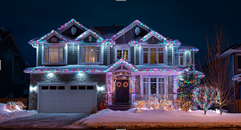
Learn how to pick outdoor Christmas lights that can handle cold Canadian weather. Find simple guidance on safety labels, waterproof ratings, cords, and ways to avoid electrical risks.
The Smart Way to Pick the Safest Outdoor Christmas Lights for Canadian Winters
Canadian winters can be pretty brutal – heavy snow, biting winds, and long stretches of freezing temperatures. And your outdoor lights have to deal with all of that, all season long. So picking the right set of lights can make a huge difference for both the looks of your home and your family’s safety.
Start with the Safety Label
You’d be surprised how many people overlook this step when buying outdoor lights. But the truth is, the label is a great place to start.
- Look for that cUL or CSA mark. That’s the sign that the lights have been put through the safety tests – just for use in Canada.
- Don’t bother with indoor strands – that’s not what they’re made for. They just won’t stand up to the moisture and wind.
Understand the Waterproof Rating Game
Some lights are better at handling water than others.
- A strand with an IP44 or higher rating should be good enough for most front yards.
- If you want them to last, look for bulbs with sealed fixtures – those are way more resistant to the freeze-thaw cycle.
- And make sure the plug and connectors are covered – but not so much that heat can’t breathe.
Get a Cord that’s up for the Job
The safety of your light display starts and ends with the cords.
- Look for cords that are specifically marked as outdoor-use and cold-weather rated.
- A thick jacket on the cord will make it a lot more flexible in the deep cold.
- And don’t forget to choose a cord that’s long enough to reach all the places you need it to – so you’re not having to bend it in strange ways or yank it tight.
Plan Ahead – Avoid Trouble Later
Good planning can save you so much hassle later on. Try these tips:
- Use the right clips: ditch the metal clips that can conduct electricity and freeze in place. Go with plastic ones instead.
- Get your plugs off the ground: don’t let the snow cover up your plugs – that’s just asking for trouble.
- Space them out: leave some room between the lights so ice can’t get a good grip on the wire.
Cut Down on Electrical Risk
You can lower the chances of a short circuit by following a few simple rules.
- Get a timer so you can control how long your lights are on and avoid putting too much strain on the cords.
- Don’t overload the system – limit the number of sets you connect, as it says on the box.
- And if you see ice building up around the outlets or cords, unplug the lights – it’s just not worth the risk.
See also: From Market to Vase: How Our Florists Handpick Every Stem
Know When it’s Time to Retire Old Lights
Older lights are always more prone to failing – especially in the cold.
- Keep an eye out for cracked insulation – that’s usually a sign that the lights are done.
- If the sockets are loose or there are dark spots near the bulbs, it’s time to replace that set.
- And yes, it might seem like an extra expense – but it’s way cheaper than dealing with the consequences later on.
A Quiet Word of Advice
Decorating your home for Christmas can be a real treat – but working on ladders in the cold, and dealing with electrical setups, can be a bit of a nightmare. If you’re not feeling confident about the job, or the weather starts to turn ugly, just call in a pro – they do this stuff all the time, and they’ve got the gear to match.